


By Callie Stephenson
Remember suncatchers? The way the glass would collect light and spin drops of color across a room?
Sometimes, that is exactly how gifts work, concentrating energy in one place, and dispersing it across campus in individual rays, each with their own unique shade.
Caught in the summer sun
It is late afternoon at a community center in Greeley and kids are arriving with their parents, aunts, or uncles after work. The families have elected to take part in a wellness program and will meet twice a week in this newly established community. For six weeks, the families will cook meals together, participate in group exercises, have conversations about mindfulness, and receive personalized care, all with the intention to reduce rates of type 2 diabetes in adolescents.
The program functioned both as community outreach – a way to provide resources to folks who may not have access to them otherwise – and as a research opportunity for one medical student’s summer project investigating the factors that contribute to chronic health conditions in children and the effects of approaching those concerns from multiple angles. Families that opted to participate in research alongside the community program received a health screening before the first meeting and a journal to help them track their daily activity and better understand themselves. At the end of the program, another screening was completed and Jessica McQuaid spent her summer working with the data.
McQuaid is a medical student at the University of Colorado Anschutz School of Medicine at the Fort Collins Regional Medical Campus. She received funding from the Orr family to support her summer project collecting and analyzing the information gathered by the program hosting the clinic. Since late high school, McQuaid has been interested in science.
“But I liked people too,” she says, “and started to look into ways that those overlapped.”
McQuaid’s project was designed to evaluate community-based education programs and the outcomes of joint interventions like Intensive Health Behavior and Lifestyle Treatment (IHBLT) or mindfulness-based practices. Working in partnership with the wellness program was the perfect opportunity to engage with science with real human impact, driven by McQuaid’s passion and interest simultaneously.
The summer research project is a drop of color and light spun from a gift from a single family. As McQuaid shares her findings with others and takes the knowledge she gained working in collaboration with the community program into her future role as a medical professional, it will only spread.
The prism
McQuaid’s work was made possible by a gift from Dr. G. William (Bill) Orr and his wife Linda. Bill graduated from Colorado State University in 1957 with a Bachelor of Science degree in physical science. After, he earned a Doctor of Medicine degree from the University of Nebraska and spent most of his career as an OB-GYN before retiring in 1998. Dr. Orr and his wife have been giving to CSU for more than 20 years, but more recently established the Dr. G. William and Linda Orr Endowed Director for One Health. Part of the funding from the endowment was provided to support students from the University of Anschutz School of Medicine to obtain a Master of Public Health degree at the Fort Collins Regional Medical Campus, but the first year of funding supported three medical students’ summer projects, including McQuaid’s work evaluating the outcomes of community-based wellness programs for adolescents.

The project provided McQuaid the opportunity to gain research experience that will help further her medical career with a broader perspective and better understanding of community needs. The funds enabled her to focus on data analysis, but that isn’t where the impact ended – the professional development will help prepare her for residency applications after she graduates, and she can take what she learned about the value of community programs into her own future practice.
But that isn’t where the Orrs’ light stops shining.
A glint in the College of Natural Sciences
Chloe deGuzman has received support for the last two semesters and was awarded funding again this fall – the first semester of her senior year – from a scholarship the Orrs established for undergraduate students. She is studying psychology and plans to apply to Ph.D. programs after she graduates and gains more research experience. Her ultimate goal is to become a clinical neuropsychologist, where she hopes to help diagnose neurodegenerative and neurodevelopmental disorders and develop treatment plans for patients with anything from Alzheimer’s to traumatic brain injury.
For anyone outside of STEM (Science, Technology, Engineering, and Mathematics), the word research may conjure images of white lab coats, safety goggles, and beakers filled with bubbling liquid, but deGuzman had the opportunity to see what it could look like for her through classes at CSU.
“A lot of times when you hear about research, especially because a lot of graduate programs require that you have six months, sometimes up to two years of research experience, it is kind of hard to envision what that is. I think CSU, in general as an institution, does a really good job with letting students know what is out there.”
This scholarship has allowed deGuzman to explore her interests and provided the space to strategize the next steps that will meld her interests in psychology and medical research. At one point, she was balancing three jobs, but the support has given her more freedom to focus on her future. She says, the scholarship “definitely just alleviates a lot of stress that a lot of students tend to have, and I consider myself very lucky and very much appreciate what they are doing for other students.”
While McQuaid is currently in medical school and deGuzman is beginning to plan her path toward a Ph.D. program, they share more in common than a future in healthcare and support from gifts from the Orrs. A prism can take the form of a family, and for the Orrs, it is the belief in equitable access to healthcare that creates a sparkle.
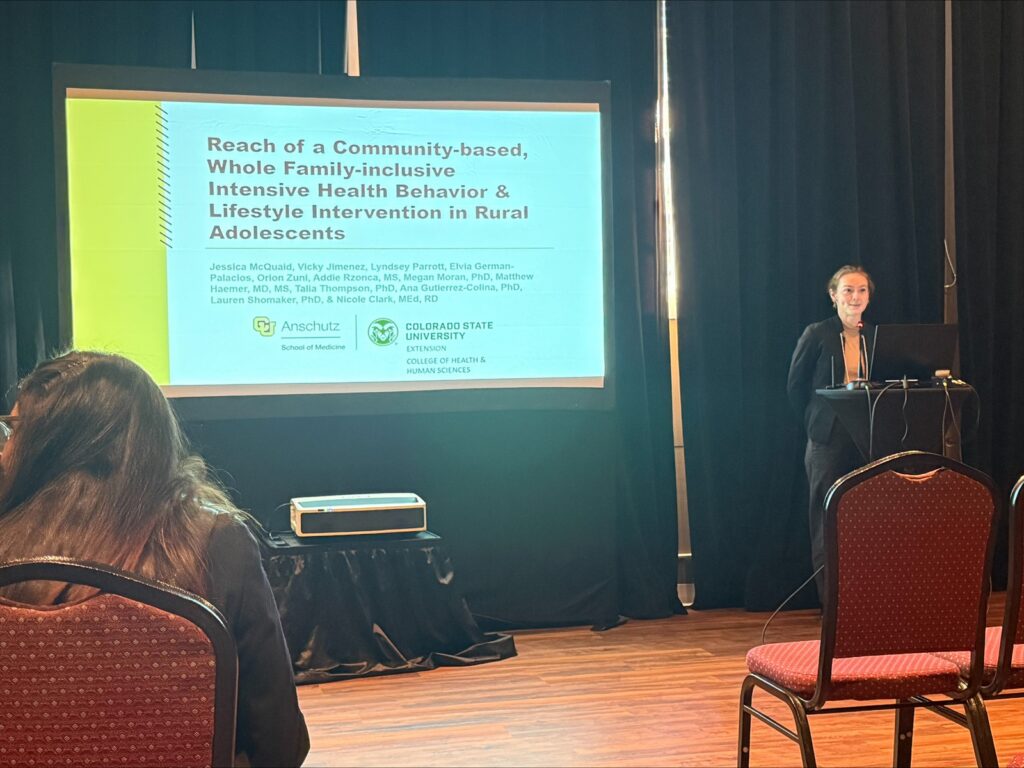
McQuaid’s summer project allowed for a better understanding of the community program that she worked with, determining how the unique program, designed to fit around school and work schedules and provide individualized health information, is serving families, youth, and their support systems. Though the community program and McQuaid’s research were funded separately, McQuaid’s research expands the field with insight into real data and contributes to the broader knowledge of factors that play into adolescent health with the intention to help future outcomes.
For deGuzman, it is personal.
“It’s just awesome to know that somebody sees the potential and thinks that they want to kind of help me get there,” she says. “It just means a lot coming from people as opposed to an institution or entity.”
This is the kind of confidence that is motivating – the good kind of contagious – that can spread through a community like the moment a suncatcher finds just the right light and shines in all directions.